· Property Assessments for Landlords Services Ltd (PALS)
Most people booking their first fire risk assessment are quietly braced for bad news. They picture someone arriving with a clipboard, finding a long list of expensive faults, and leaving them with a bill and a problem.
In practice it is far more ordinary than that, and considerably more useful. Here is what actually happens, start to finish.
Before we arrive
All we really need is clear access to every part of the property — including the loft hatch, plant rooms, cupboards and anywhere else that is normally locked. If you have building plans, bring them out; they make the layout work much quicker.
It also helps to gather any fire safety records you already hold: alarm test logs, extinguisher service labels, emergency lighting certificates, electrical reports. If you don't have any, that is not a problem and it is not a black mark. Plenty of landlords don't, and part of what you get from the visit is knowing what to start keeping.
We start with the layout, not the equipment
Most people expect us to head straight for the extinguishers. We don't. The first thing we look at is how the building is arranged and how somebody would get out of it in the dark, in smoke, half asleep and unfamiliar with the place.
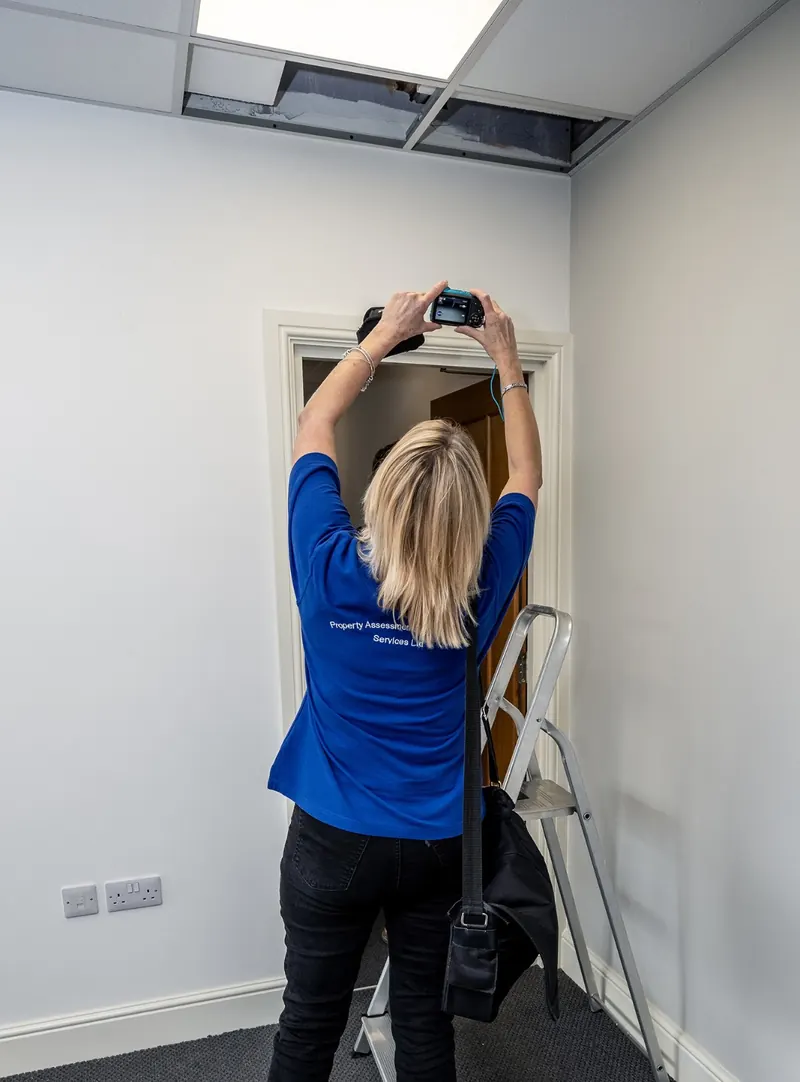
That means walking the escape routes, looking at where the staircase lands, checking whether any bedroom can only be reached through another room, and asking what happens if a fire starts in the worst possible spot. Layout is the factor that most often turns a manageable fire into a serious one — we wrote about a holiday cottage where exactly that applied.
Then detection, alarms and lighting
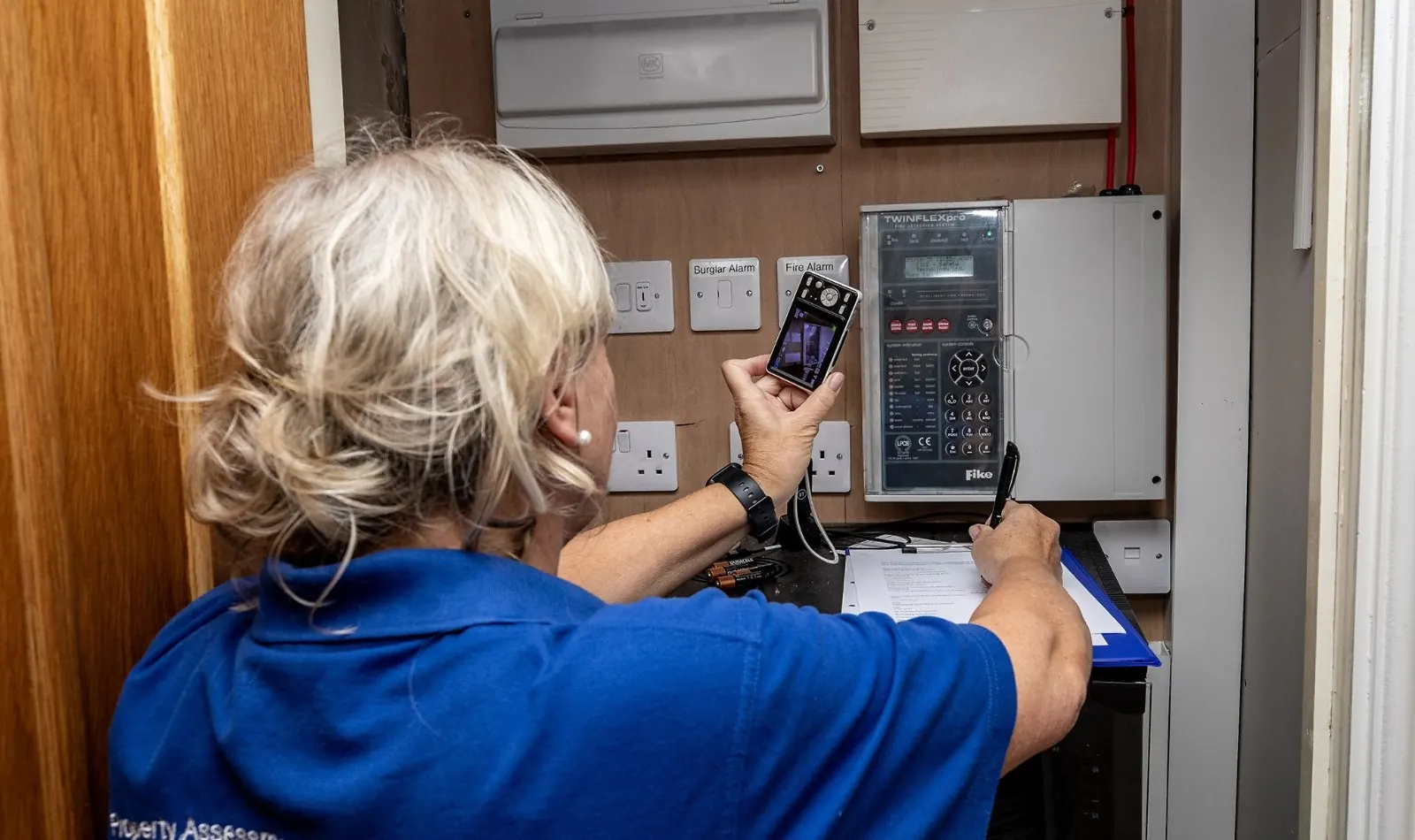
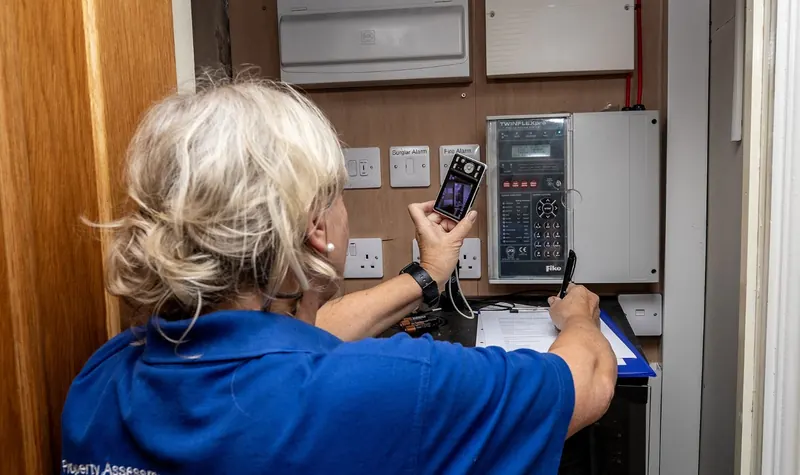
We check what detection is fitted, whether it suits the building's use, and whether it is in working order and appropriately maintained. In a shared building that means looking at the panel, the zones and how a warning would actually reach somebody asleep on the top floor.
Emergency lighting gets the same treatment: is there any, does it cover the escape route, and would it come on if the power went off during a fire?
Equipment, doors and signage
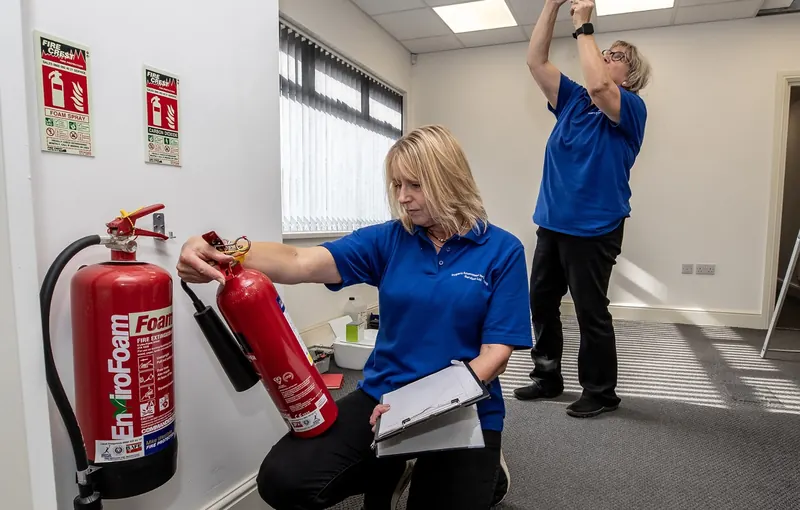
This is the part people expect. We check that extinguishers are the right type for the risks present, are in date, are properly mounted and have been serviced. We look at fire doors — whether they close fully, whether the seals and hinges are intact, whether anything is propping them open. And we check that signage is present, correct and actually visible in the dark.
And the people
A fire risk assessment is about risk to people, so we ask about who uses the building. Are they staff who know the layout, or guests who arrived at 11pm and have never seen it before? Does anyone sleep there? Is anyone likely to need help getting out?
The same building can need very different measures depending on the answers. A holiday let and an office with the identical floor plan are not the same risk, because the people in them behave completely differently.
How long it takes
It depends on the size and complexity of the premises. A small flat or shop is often an hour or two on site. A large or unusual building can take most of a day. The written report follows afterwards — that part is done at a desk, not while we are standing in your hallway.
What you get at the end
A written report setting out what we found and what to do about it, in a sensible order. Not a list of everything imaginable, but a prioritised plan: the things that genuinely matter for life safety first, the housekeeping items after.
The law here is worth knowing. Since October 2023, the requirement to record your fire risk assessment applies to all premises covered by the Fire Safety Order — the old threshold based on how many employees you have is gone — and all of your findings must be recorded, not merely the significant ones. That record is what you produce if a fire officer, an insurer or a booking platform ever asks.
And afterwards
The assessment is not a one-off certificate that expires on a date. The Fire Safety Order requires it to be reviewed regularly so it stays up to date, and reviewed in particular after any significant change — a refurbishment, a change of use, new occupants — or after a fire.
An annual review is usually sensible, and it is what we would recommend, but it is worth knowing that this is good practice rather than a statutory deadline. Anyone telling you an annual assessment is a legal requirement is overstating it. If you have made changes since your last one, that matters far more than the date on the front cover.
We also stay available afterwards. If a recommendation is unclear, or a contractor quotes for something that sounds disproportionate, ring us — that conversation is part of the job, not an extra.
About Property Assessments for Landlords Services Ltd (PALS)
We carry out accredited fire risk assessments and independent HHSRS assessments across Cornwall, including Truro, Newquay, St Austell, Bodmin and Liskeard.
Both our assessors are Third-Party Accredited Intermediate Fire Risk Assessors on the National Fire Risk Assessors Register (NFRAR), with over 20 years' combined experience as former Local Authority Housing Enforcement Officers. Get in touch and we will talk you through what your property needs.